

Burning Bush Blogs
Equipping Men with Biblical Knowledge and Leadership Skills
Category: Personal Study
Thread: Battling Depression in Scripture
Post Topic: The Angriest Prophet in the Bible – Jonah
Post in Thread: #7
Previous: Provision for the Most Bitter Widow in the Bible – Naomi
Next: Coming Soon
Scripture: Jonah 4:1-11
Key Verses:
Jonah 4:1-3
But to Jonah this seemed very wrong, and he became angry. 2 He prayed to the Lord, “Isn’t this what I said, Lord, when I was still at home? That is what I tried to forestall by fleeing to Tarshish. I knew that you are a gracious and compassionate God, slow to anger and abounding in love, a God who relents from sending calamity. 3 Now, Lord, take away my life, for it is better for me to die than to live.”
Observations
Context
Backstory
Click to open and learn how Jonah ended up in Nineveh in chapter 4
Backstory (chapters 1-3)
- God spoke to his prophet Jonah and told him to go preach repentance to the citizens of Nineveh, part of the enemy Assyrian empire.
- Jonah’s face turned cold and his heart to stone. He would never be an instrument of God’s love and mercy to the people who were prophesied to destroy his beloved Israel. Never!
- Furious, Jonah said “No,” fled to Joppa, and from there boarded a ship to Tarshish—the exact opposite direction of Nineveh. (Probably in modern Spain.)
- In a state of despair, a depressed Jonah descended into the belly of the ship and fell asleep, cutting himself off from human contact.
- God sent a horrific storm that terrified the sailors.
- Jonah was so far gone that he didn’t care. He snored away below deck.
- The desperate sailors wanted everyone to pray to all of their gods. They woke Jonah and berated him for sleeping. They cast lots to determine who was at fault, and it fell on Jonah.
- Jonah, depressed and defiant as he was, admitted that he was to blame and had them throw him overboard.
- Likely, he expected to die. Based on how mad he was, he didn’t seem to care. But he didn’t want the others to perish.
- They did so, and the seas calmed.
- God had a deeper purpose.
- Rather than letting the defiant one drown, God sent a huge fish to swallow Jonah.
- Inside the fish, Jonah prayed a prayer of repentance.
- Somewhere back on the shore of Israel, the fish vomited out a shaky, white and withered apparition, closer to Nineveh than when he started.
- Jonah went to Nineveh reluctantly, and preached what God had told him.
- The Ninevites had 40 days to turn from their wicked ways before God destroyed them.
- The message reached the king, and he declared a nation-wide fast.
- God saw their repentance, and spared the city.
What was Nineveh?
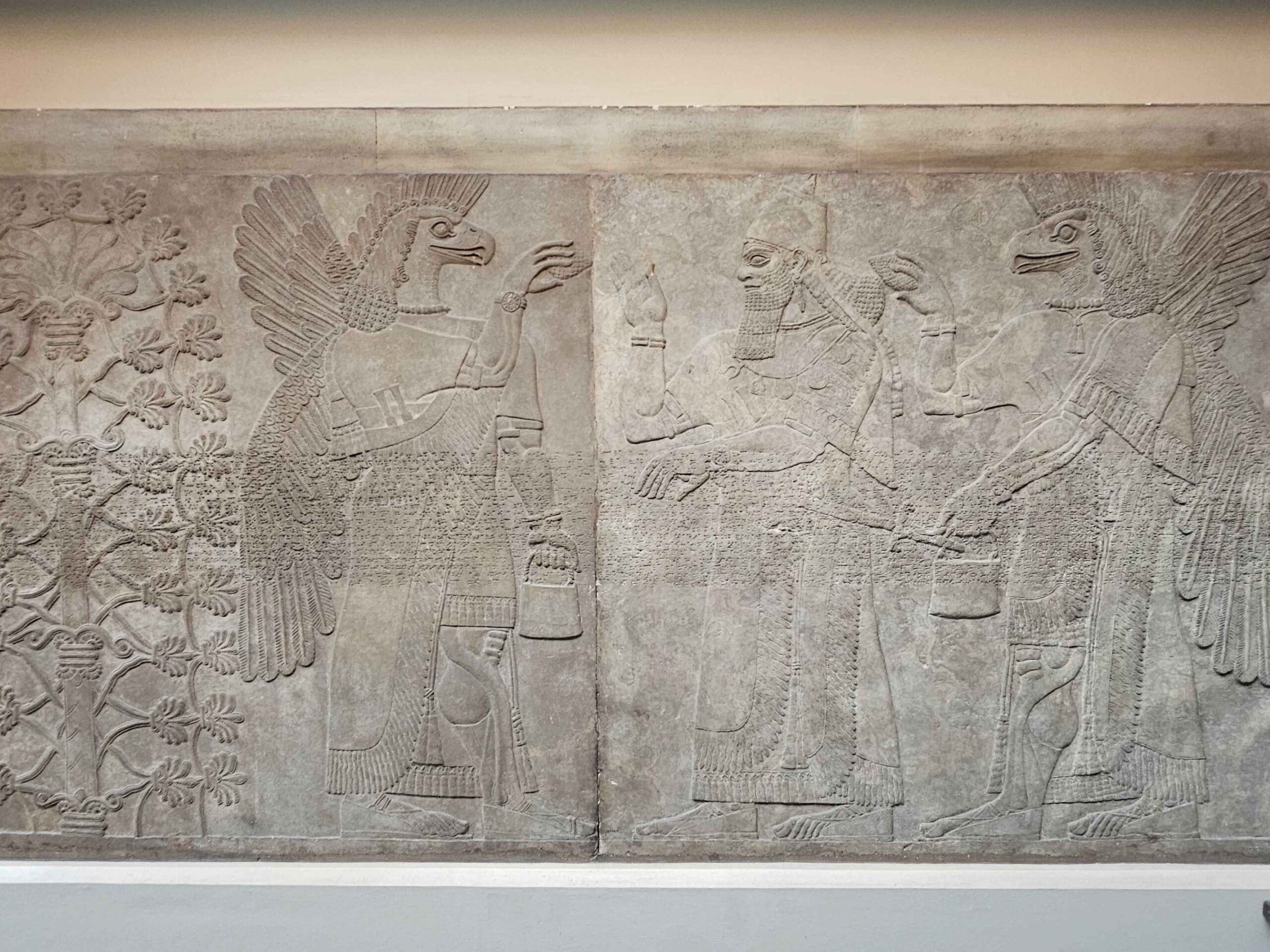
Nineveh was the capital of the brutal and mighty Assyrian empire. The Assyrians preceded the Babylonian empire, and constantly threatened to invade Israel. They were known for taking captives and enslaving the people they conquered. Furthermore, they were a pagan people, worshipping their own man-made gods with no ties to the one true God or to the people of Israel. Eventually, the Assyrians did in fact conquer the northern tribes of Israel, leaving them in a permanent state of disarray.
It’s no wonder that Jonah was shocked by God’s instructions to go preach to this hostile, heathen, Gentile nation.


Jonah’s Response
- After reluctantly warning the Ninevites to repent, Jonah left the city. He watched from afar, hoping that God would send fire and brimstone on Israel’s enemy.
- It didn’t happen. From the least to the greatest, they repented, and were spared. Jonah’s fury multiplied.
- He prayed, asking God to take his life rather than force Jonah to live with his role in the grace showed to the Assyrians.
The Withering Shade Plant
- Overnight, God sprang up a shade plant that provided a respite from the blazing sun.
- Jonah’s tiny bit of happiness was short-lived. The next dawn, God sent a worm to destroy the plant. Then, more misery to Jonah—a scorching wind.
- The sequence infuriated Jonah. He wished he could crawl in a hole and die.
- God’s rebuttal:
- God asked “Is it right for you to be angry about the plant?”
- Jonah wouldn’t back down. “It is.”
God asked why Jonah was more concerned about a plant than 120,000 people who didn’t know their right hand from their left. We never hear Jonah’s answer. Did he ever repent? Did he ever get over his temper tantrum? Let us know what you think in the comments.
Interpretation
Author
Jonah was a real person, born in Galilee. He, along with Amos, ministered to the northern kingdom of Israel during the time of evil king Jeroboam II, before he was called to journey to Nineveh.
Genre
All Old Testament prophets begin with “The word of the Lord came to me” or they assert they have a prophetic vision from God. Then they delineate those prophesies. Jonah’s “word from the Lord,” however, is a command to go into enemy territory. He writes his historical narrative as a confession.
Setting
Time:
Beginning in the middle of eighth century BC (2 Kings 14:25).
- Mid-8th century –760 BC. Jonah goes to Nineveh. God doesn’t destroy Nineveh at this time.
- About 40 years later — 722-720 BC Assyria takes Israel captive (2 Kings 17:1-6). The revival didn’t last long 😞.
- Mid-7th century –663-612 BC. Nahum predicts the defeat of Nineveh. (The Assyrian Empire was riding high at this time.)
- 612 BC. A coalition of Babylonians, Medes, Scythians defeat Nineveh. The fulfillment of Nahum’s detailed prophecy.
- 2025 AD. Nineveh lies in ruins.
Place:
From Israel to the open sea, back to Nineveh (present-day Iraq).
- Nineveh was ancient. Noah’s son Ham was the grandfather of Nimrod. Nimrod established Babel and Nineveh—both cities of unrelenting rebellion against God (Genesis 10:9-11)
- Nineveh had become a huge, impressive city – it would take three days to walk from one side to the other.
- Its depravity, however, contrasted sharply with its beauty—unspeakable cruelty to prisoners of conquered lands. Child sacrifice. Idolatry. Arrogance. Violence. Incest. Temple prostitution. And that’s just a beginning.

Takeaways
- Jonah’s anger at God didn’t subside, even after God demonstrated his sovereignty with the tree, the worm, and the wind.
- God’s object lesson with the shade plant only made Jonah angrier.
- God’s final words to Jonah in this book point out how repugnantly the prophet was acting.
- Hatred for Jonah’s enemies—Israel’s enemies—ran deep. He literally wanted them to burn in hell.
- We can’t run from God. We can’t defy God. He will get his way.
- Attempting to do things our way only makes it more difficult.
- Even in the midst of his defiance of Yahweh, Jonah understood God’s character.
- Jonah declared the LORD to be “a gracious and compassionate God, slow to anger and abounding love, a God who relents from sending calamity.”
- Jonah knew God was serious about forgiving Nineveh.
- Jonah’s hatred burned him up inside. He’d rather die himself than witness God’s grace for the Assyrians.
Imagine
The Undeserving
“I won’t ask what you’re running from,” the captain said. “But Tarshish might as well be the edge of the world.”
Jonah squeezed his last bag of coins. He’d be turning his back on his homeland forever. But wasn’t God asking him to do that anyway?
Of all places, God, why Nineveh?
It’s not fair. Assyrians don’t deserve God’s mercy. They don’t deserve the chance to repent. Why doesn’t He just annihilate them right now? Like Sodom and Gomorrah? Even King Jereboam would bow if he heard that God did such a thing! Aren’t we supposed to be the Chosen People? Sure, we’ve strayed, but we’re nothing like them—utter evil. Why does God tolerate evil?
The cargo ship captain grew impatient. “Well? You coming?”
They’ll probably kill me at the city gates. Their idea of recreation is hunting lions from their chariots. Enemy kings who defy them are tortured and torn apart. Imagine what they’d do to someone like me?
This is too much, God. Find someone else. Better yet, forget about this terrible idea of yours. It’s not right.
“Jonah, last call—“
Wordlessly, Jonah handed him the bag and made his way up the gangplank.


Correlation
The Prophet Habakkuk
Habakkuk also didn’t understand God’s handling of evil.
Like many prophets, Habakkuk despaired over the problem of suffering and evil. He asks God why evil men prevail:
2 How long, Lord, must I call for help,
– Habakkuk 1:2-4
but you do not listen?
Or cry out to you, “Violence!”
but you do not save?
3 Why do you make me look at injustice?
Why do you tolerate wrongdoing?
Destruction and violence are before me;
there is strife, and conflict abounds.
4 Therefore the law is paralyzed,
and justice never prevails.
The wicked hem in the righteous,
so that justice is perverted.
God’s response – You won’t believe it, Habakkuk. I’m going to allow Babylon to rise to greatness—a ruthless, evil nation.
5 “Look at the nations and watch—
Habakkuk 1:5-6
and be utterly amazed.
For I am going to do something in your days
that you would not believe,
even if you were told.
6 I am raising up the Babylonians,
that ruthless and impetuous people,
who sweep across the whole earth
to seize dwellings not their own.
Habakkuk says “…wait, what? They’re even worse than we are! Why would you tolerate such a thing?
Your eyes are too pure to look on evil;
– Habakkuk 2:13
you cannot tolerate wrongdoing.
Why then do you tolerate the treacherous?
Why are you silent while the wicked
swallow up those more righteous than themselves?
Habakkuk’s Conclusion
Habakkuk 3:16-19 – Unlike Jonah, Habakkuk doesn’t let his anger at Babylon and the disbelief of his own people to fester. He doesn’t allow it to turn him bitter and depressed. He determines to trust God’s higher plan:
- Verse 16 – Habakkuk trembles awaiting the impending calamity of the Babylonians.
- Verse 17 – The fig tree won’t bud and the vineyards won’t produce grapes…
- Remind you of Jonah’s shade plant?
- Verse 18 – …But Habakkuk will still rejoice in the Lord. Quite a contrast to Jonah’s response.
- Verse 19 – Habakkuk acknowledges God’s sovereignty. Instead of being angry at God’s choices, Habakkuk takes strength from it.
Application
Generic Applications
Today isn’t much different from when Jonah lived. God’s enemies still cry out against him and his people. It’s easy to sympathize with Jonah. Nineveh was evil. How comfortable would you be if you were sent to the heart of North Korea to preach their demise? Or to proclaim that Jesus is the only way to heaven in the streets of Tehran?
- God’s way is the right way, whether we understand his plan or not.
- Jonah clearly knew what God wanted him to do, and ran from it. He acknowledged God’s sovereignty, but unlike Habakkuk, Jonah fought against it. He didn’t take comfort in God’s supremacy like Habakkuk did. He ran, and when that didn’t work, he allowed his rage to control his soul.
- God doesn’t always give clear answers. He didn’t give Habakkuk or Jonah his entire plan. But we can rest assured that his way has a purpose and has meaning.
- The little book of Jonah is incredibly encouraging. It emphasizes that our God is both sovereign and compassionate.
- He wanted to spare Gentiles.
- He never gave up on grumpy Jonah. God preserved his life. He gave Jonah a second chance to obey. He provided teaching moments to his depressed prophet, who was sitting on a hill hating the half million or more people below.
Personalize it
- Maybe God is using our sinfulness to bring us back to himself.
- Scripture never, ever tells us to hate God’s enemies. Jesus says to pray for them, not hate them.
- Rather than living in anger, gloom, and depression, I choose to run toward God instead of away from him.
- As I pray, I tell God my worries, fears, and complaints. I pray the words of Scripture and ask God to put his thoughts, his will into my heart.
- I thank God that I can see a bigger picture than these prophets. More of God’s plan has already unfolded. Jesus has already defeated death and evil. I may not understand it all yet, as evil still seems to triumph way too often. But I know I can trust my redeemer.
- I don’t have to live the same kind of sad existence Jonah did. I refuse to let anger fester and grow inside. As difficult as it is to understand sometimes, I will trust God in the midst of it all.
Summary
In this series about Bible characters who experienced depression, we are adding a bonus section that summarizes each person’s affliction.
Cause, false expectation, remedy
Cause – Jonah allowed his anger and hatred of the Assyrians to fester. The idea of the evil empire prospering and turning to God while his own nation continued to languish drove him into a state of depression.
False Expectation – The problem of evil in the world would be dealt with by God in a manner that would make sense to Jonah. He expected God to react the way a human would react.
Remedy – In the final verses, God uses the insignificance of the dying shade plant to remind Jonah that God has a much bigger plan than Jonah can fathom. Did it help Jonah? We don’t know—the book of Jonah ends with a cliffhanger. God’s ultimate remedy for the problem of evil in the world is not unveiled until 700 years later on the cross of Calvary.
Bible study methodology adapted from Searching the Scriptures with permission from Tyndale House:
Swindoll, Charles, Searching the Scriptures. Tyndale House Publishers, 2016.