

Burning Bush Blogs
Equipping Men with Biblical Knowledge and Leadership Skills
Category: Personal Study
Thread: Enigmatic Bible Characters Who Changed the World
Post Topic: How the Egyptian Princess Saved the Hebrew Baby
Post in Thread: #2
Previous: Paul’s Nephew Exposes a Deadly Plot
Next: Devout Palace Administrator Thwarts Evil Queen
Scripture: Exodus 1:15-2:10
Key Verses:
Exodus 2:5-6
5 Then Pharaoh’s daughter went down to the Nile to bathe, and her attendants were walking along the riverbank. She saw the basket among the reeds and sent her female slave to get it. 6 She opened it and saw the baby. He was crying, and she felt sorry for him. “This is one of the Hebrew babies,” she said.
Enigmatic, Obscure Bible Characters
An enigma is a person that is mysterious or puzzling to understand. The Bible contains many such characters. The writer will drop a name or describe a nameless person, and tell a story about them. As a writer, it always makes me wonder – what makes them tick? Why was that particular name dropped? What’s their backstory?
In this series, I put you in their situations, and describe what we know and what we speculate about these obscure characters from history.
Observations
Context
The book of Genesis tells the story of The Patriarchs – the fathers of the nation of Israel, beginning with Abraham and ending with the story of Joseph. At the end of Genesis, by God’s providence, Joseph, having once been exiled to Egypt, found himself second in command to Pharaoh. Due to extreme famine, Joseph’s father and many brothers migrated their families to Egypt as well. Pharaoh, who loved Joseph, gave them rich land, and they happily settled in.
However, as generations passed, a new Pharaoh arose who didn’t remember Joseph. The beginning of Exodus describes how he enslaved and brutally treated God’s people. The Egyptians worried about the vast numbers of Hebrews that had been born. Fearing that the Hebrews would become too strong and rebel, Pharaoh ordered that all male babies of Hebrew women be killed.
Under this backdrop, the baby Moses was born.
God’s Protection of Moses
Pharaoh summoned the Hebrew midwives and commanded them to let the baby girls live but kill all the little Hebrew boys they delivered. The midwives lied to Pharaoh, telling him that they were unable to arrive quickly enough with the “vigorous” Hebrew women, and so the boys lived. Pharaoh changed course, ordering that all baby boys be thrown into the Nile River.
When Moses was born, his mother hid him as long as possible. After three months, knowing he’d be discovered, she floated him a basket in the Nile River, and sent his sister Miriam to watch what happened to him.
Along came the daughter of the Pharaoh. Why do you think she drifted so close to the Hebrew dwellings? As luck as would have it (more accurately, as God would have it), she discovered the baby in the basket, and felt compassion for him. Miriam leaped into action, offering to find a nursemaid for the child. The princess agreed, saying she would even pay for the service. Moses’s mother got paid for nursing her own child!
When Moses was old enough, he was adopted into the Egyptian household by this princess, who gave him his name, saying “I drew him out of the water.” Apparently Moses had such a meaning.
Interpretation
Setting
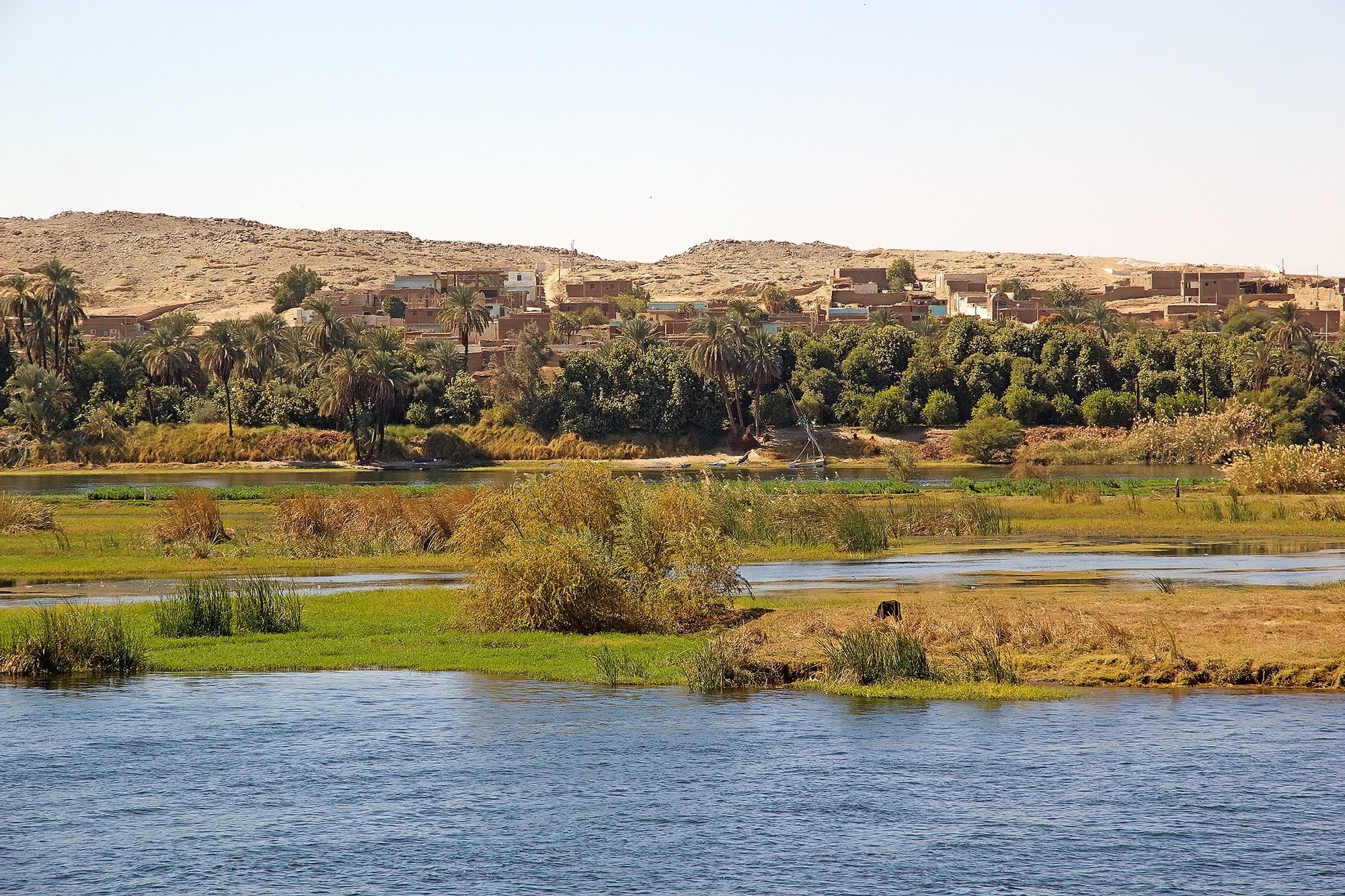
This story takes place in Egypt, along the banks of the Nile River.

Genre
Narrative description, told in the form of an “Epic.” Exodus follows the life of the book’s flawed hero Moses from birth, describing how he delivers his people out of bondage.
Takeaways
The story of Moses’s birth and his rescue is foreshadowing of the rest of the story of Exodus. Moses was in a dire situation, floating helplessly in the Nile. But God brought an unlikely deliverer in the Egyptian princess to draw him out of the water. In the same way, God’s chosen people found themselves in the dire circumstances of slavery in Egypt. But God brought an unlikely deliverer in Moses to draw them out of bondage and out of the land of Egypt.
Regardless of who the Egyptian princess was, she was used by God to preserve his plan for the course of history when she saved Moses’s life.
Imagine
Hatshepsut wandered farther than usual from the palace, following the banks of the Nile. Soon the rainy season would be upon them, and the river would overflow, washing precious nutrients into their crops.
Her attendant Kafele wrinkled her nose. “My Lady,” she said. “We are nearing the Hebrew encampments. Should we find a safer place to bathe?”
Hatshepsut kept walking. “It is my father who fears them.”
“But Hatshepsut, the reeds ahead. Crocodiles could be hiding. We should return to the Egyptian quarter, where it is cleaner.”
“Perhaps if the Hebrews had more time for hygiene and spent less time working, we would not think these things of them? Let’s go to the other side of the reeds, so you won’t have to worry about reptiles.”
Kafele glared at her. Hatshepsut ignored the disrespect.
They both stopped at the sound of a baby crying. Was the wind playing tricks? It sounded like it came from the water.
Hatshepsut saw it first. “Look! By the reeds! Kafele, retrieve that basket for me.”
“But Princess, the crocodiles. It isn’t safe.”
“Fine, I’ll get it myself.”
“No!” Kafele said. “Please allow me to risk my life for you.”
Hatshepsut rolled her eyes. She hadn’t seen a crocodile in two years.
When Kafele returned, the baby’s crying slowed. Hatshepsut lifted the child out of the basket, and he smiled at her. She squeezed him against her chest. How could she allow such a sweet thing to be killed?
“It’s a Hebrew child,” she said. “Isn’t he cute?”
Kafele scowled. “Of course it’s a Hebrew baby. Some woman has defied your father’s order. Surely you won’t join her rebelliousness?”
“Surely you wouldn’t allow such a beautiful child to die? What if he was your child, Kafele? Don’t you remember when your son was born?”
“Yes, but-that’s different.”
“Why? Because you’re Egyptian?”
“Because I’m not defying a Pharaoh’s order to let my child live.”
“I will not hide him from my father. I will present the baby to him, and let him decide. After all, he has no legitimate heir to the throne.”
Kafele pointed behind her. Hatshepsut turned to see a young Hebrew woman bowing before her. “Yes?”
“If it please the princess,” the youngster said. “May I assist in finding a woman to nurse the baby?”
Hatshepsut studied the girl. She seemed sincere. And Hatshepsut had no way to feed the child. “Yes, go, and bring such a woman to me. I’ll be happy to pay her for her trouble.”
The girl bounded off toward the encampments.
Kafele shook her head. “She’s probably going to find the birth mother. You’re going to end up paying her to nurse her own child!”
Hatshepsut laughed. “You don’t think I know that? Even better! I want that child healthy. My father won’t be able to resist me when I show him the precious baby.
Cheer up, Kafele! You’re going to be an aunt!”
Historic Note
There is much debate about when Moses lived, when the Exodus happened, and who Pharaoh’s daughter was. In my fictional story, I use Hatshepsut, who later became one of the few female Pharaoh’s. This would explain why her successor, Thutmosis III, would have been so hostile to Moses, a potential rival for the throne, during the ten plagues.
The following link makes a case for Hatshepsut, although it puts her at age 6 or 7 when plucking Moses out of the Nile (younger than in my fictional account above): Who Adopted Moses?
Correlation
I John 3:17-18 – These verses make two related points:
- If we see a brother or sister in need, and we have the ability to help, but we do nothing, then the love of God is not in us.
- We don’t love with words or speech, but with action and truth.
The Egyptian princess saw a child in need, and she had the ability to help. She chose compassion and love. She did so with actions, not with words. Her real story reminds me of Jesus’s parable about the good Samaritan. The Samaritans were hated by the Jews, yet it was the Samaritan who took action and demonstrated love to help the wounded traveler.
Application
Generic Applications
The Midwives’ Defiance – Justified lying?
Shiphrah and Puah. Have you heard their names before? They defied the Pharaoh’s orders, and then lied to him about it (Exodus 1:19). And they probably had a good laugh about their bold lie afterward.
Do you see anything wrong with what they did? First, they defied the orders of the man in charge of Egypt. Second, they lied. Is lying for a good cause justifiable? Could they have defied the king another way? Let me know your thoughts in the comments.
As for my opinion, I base it on what God thought of these midwives in Exodus 1:20-21.
Trusting God, but acting on that trust
The mother of Moses didn’t blindly place Moses in a basket and cast him into the Nile. She sent his sister, Miriam, to watch him. Furthermore, do you recall my earlier question about what the princess might have been doing so near the Hebrew encampments? What if she wasn’t near those encampments? What if Moses was deliberately brought to a spot near where the princess was known to bathe?
Clearly Moses’s mother trusted God in this situation, but didn’t just absolve herself of responsibility. I bet she also prayed fervently that God would give her a plan of action to save her child.
Often God wants us to participate in his carrying out his plan, rather than just watching and expecting good results. During times of crisis, let’s resolve to ask the Spirit to give us direction and to provide courage to follow His leading.
Personalize it
God placed Moses squarely in the life of the Pharaoh’s daughter. The convenient thing to do would be to obey her father’s command. She could have turned a blind eye, or commanded someone else to deal with the baby in the basket. But she chose compassion. And her choice set off a chain of events that changed the world.
Is there someone in my life that needs my compassion today? It might be more convenient to let someone else worry about them. But will anyone else reach out? Or is God calling me to make a difference?
Bible study methodology adapted from Searching the Scriptures with permission from Tyndale House:
Swindoll, Charles, Searching the Scriptures. Tyndale House Publishers, 2016.