

Burning Bush Blogs
Equipping Men with Biblical Knowledge and Leadership Skills
Category: Personal Study
Thread: Enigmatic Bible Characters Who Changed the World
Post Topic: Cornered King Hezekiah Turns to the Lord’s Prophet
Post in Thread: #4
Previous: Devout Palace Administrator Defies Evil Queen
Next: Devoted Messenger, Beloved Brother, Sacrificial Soldier – to the edge of death and back
Scripture: II Kings 18:13 – 19:35
Key Verses: (but read entire passage!)
II Kings 19:16-19
Give ear, Lord, and hear; open your eyes, Lord, and see; listen to the words Sennacherib has sent to ridicule the living God.
17 “It is true, Lord, that the Assyrian kings have laid waste these nations and their lands. 18 They have thrown their gods into the fire and destroyed them, for they were not gods but only wood and stone, fashioned by human hands. 19 Now, Lord our God, deliver us from his hand, so that all the kingdoms of the earth may know that you alone, Lord, are God.”
Enigmatic, Obscure Bible Characters
An enigma is a person that is mysterious or puzzling to understand. The Bible contains many such characters. The writer will drop a name or describe a nameless person, and tell a story about them. As a writer, it always makes me wonder – what makes them tick? Why was that particular name dropped? What’s their backstory?
In this series, I put you in their situations, and describe what we know and what we speculate about these obscure characters from history.
Observations
Fun Exercise
Before we dive into the passage in 2 Kings, quickly open your Bibles to Hezekiah chapter 3, and read the first few verses. I’ll wait… Sorry, couldn’t resist. It’s an old joke (there is no book of Hezekiah), but that’s my sense of humor… Okay, now on to the actual study:
Context
Hezekiah took the throne of the southern kingdom of Judah at age 25. He made a point of obeying God and destroying all the pagan idols and symbols that his predecessors had put up. He took on many foes, including the Philistines and the Assyrians.
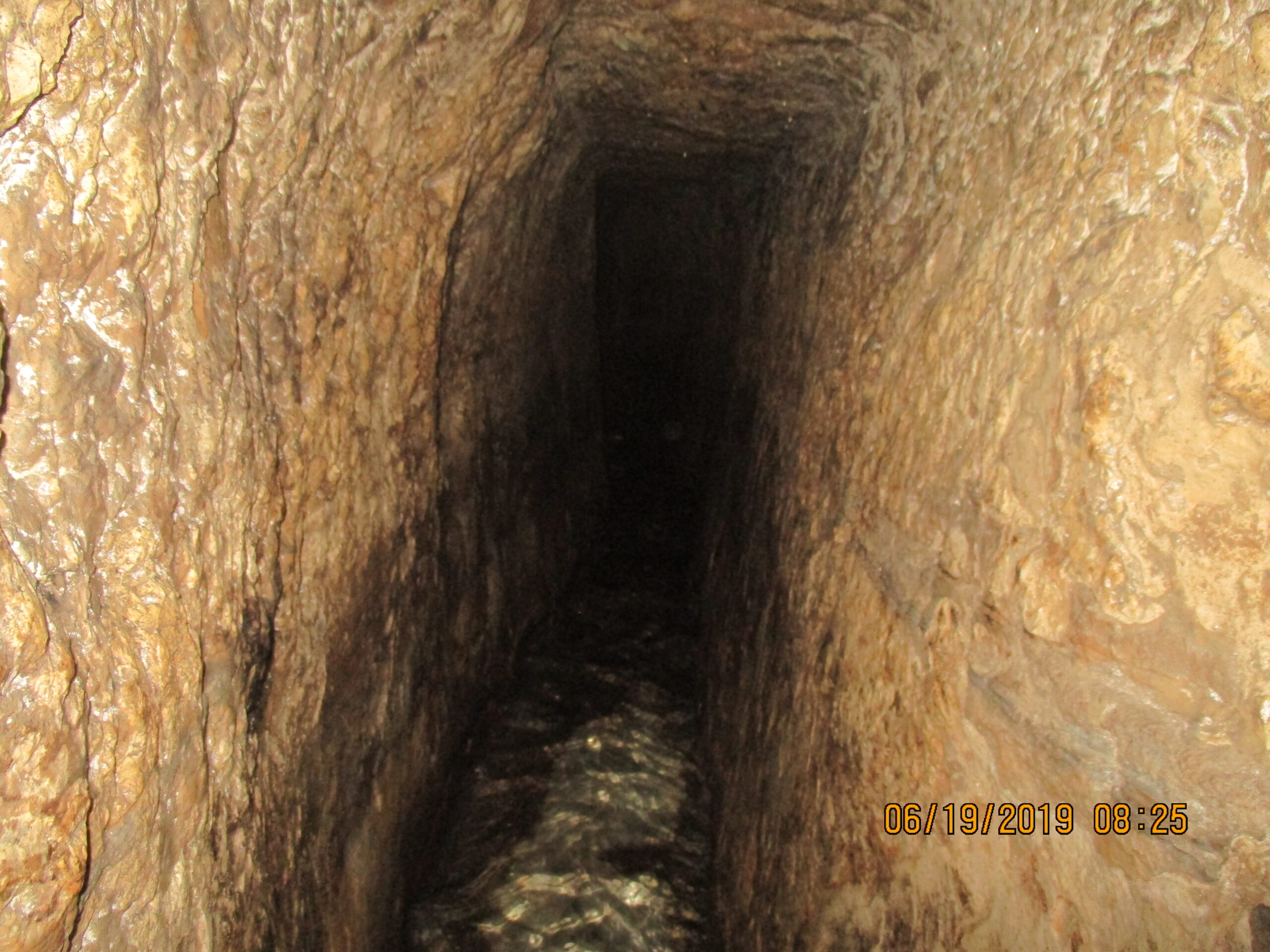
A decade earlier, the Assyrians had overthrown the northern kingdom of Israel, carrying many Hebrews into captivity. They left their own people behind to intermarry with those who remained. Knowing Sennacherib had his eyes on Judah, Hezekiah fortified Jerusalem by re-routing the water source into the city, repairing broken sections of the wall, and fortifying landfills and watchtowers. (2 Chronicles 32:2-8)
The Threat
- Ten years after sacking the northern kingdom of Israel, King Sennacherib and the Assyrians invaded Judah, defeating several fortified cities. (18:13)
- Hezekiah decided not to fight, and stripped gold off the doorposts of the temple to pay tribute. (18:14-16)
- Apparently, Sennacherib decided not to honor the tribute. While still besieging the stronghold of Lachish, he sent a delegation to Jerusalem to demand unconditional surrender. (18:17)
- The envoy mocked the Hebrews and their forces, as well as their God. They spoke loudly in Hebrew so that the citizens on the wall could hear and fear the threatening words. (18:19-35)
Hezekiah Seeks the Counsel of the Lord
- King Hezekiah sent word to the great prophet Isaiah, begging for him to pray for the remnant of the descendants of Jacob who remained. (19:1-4)
- Isaiah responded with encouragement from the Lord: “Tell your master, ‘This is what the Lord says: Do not be afraid of what you have heard—those words with which the underlings of the king of Assyria have blasphemed me. Listen! When he hears a certain report, I will make him want to return to his own country, and there I will have him cut down with the sword.’” (19:5-7)
- Sennacherib sent another envoy full of threats, boasting how no other city’s gods had saved them from the hands of the Assyrians. (19:9-13)
- Hezekiah offered a humble prayer before the Lord, begging for deliverance. (19:14-19)
Spared by the Lord
- Isaiah delivers a long message to Hezekiah
- He tells Hezekiah that the Lord has heard his prayer. (19:20)
- He promises that the Assyrians will never set foot in Jerusalem. (19:32-34)
- That very night, the angel of the Lord slew 185,000 enemy soldiers. (19:35)
- The Assyrians fled back to their capital of Nineveh. (19:36)
Interpretation
Setting
This story takes place in Jerusalem in the region of Judea.
Genre
Historical narrative, with the intent of recording the history of the kings of Israel and Judah within the context of what was supposed to be a theocracy.
Takeaways
From the Passage
- When Assyria’s invasion of Judea successfully defeated some of the fortified cities around Jerusalem, Hezekiah’s first reaction was to take matters into his own hands.
- He didn’t consult God. He didn’t pray. He didn’t ask Isaiah for advice.
- He stripped off the gold from doorposts of God’s temple. He emptied the storehouses of gold and silver.
- How’d that work out for you, King Hezekiah? Not so well – Sennacherib still demanded unconditional surrender of Jerusalem.
- Sennacherib mocked the Hebrews and he mocked God. Big mistake.
- Now that things had become desperate, Hezekiah turned to the Lord, begging Isaiah for help.
- Hezekiah humbled himself, tearing his clothes and kingly garments and putting on rags.
- Isaiah was in tune with God. He delivered good news about how the hand of God would spare the remnant of God’s people in Jerusalem.
- He called Sennacherib a blasphemer.
- He said that Sennacherib would hear a report that would make him want to return to Assyria, where he would be cut down with the sword.
- The angel of the Lord cut down a multitude of Assyrian men that night, just as Isaiah predicted.
- Imagine when Sennacherib got this report? Just as Isaiah predicted, the Assyrian king wanted to get the heck out of Dodge.
- Later, we learn, Sennacherib’s own sons actually did cut him down with the sword.
Bigger Picture – Preservation of the Remnant
God’s covenant with Abraham had promised a great nation from his descendants. A nation that would be a blessing to the entire world. To all nations. And that promise was in jeopardy. Already the northern kingdom had been overrun. Ten tribes of Israel, decimated by the Assyrians. Then the final two tribes of Judah came under assault. One by one, strongholds fell, until the crown jewel of the nation, Jerusalem, was all that remained. It should have been no match for the brutal Assyrians.
But God remembered his promise. Through Isaiah, God assured Hezekiah that he would protect that remnant of a once-great nation. And because of Hezekiah’s faith, the line of descendants from Abraham to Jesus was preserved.
Imagine
King Hezekiah stared long and hard as the men filed into the room, their faces ashen and clothes torn. They wailed and fell to the ground.
Eliakim, the head of the palace, ripped his already tattered shirt into pieces. “My King,” he cried. “They taunted us, and our God! In our language, in front of the men on the wall! The people are distraught.”
“That can’t be!” Hezekiah said. “I just paid them tribute! I had to strip gold off the temple doors!”
Shebna, the secretary, shook his head. “Where are the Egyptians? We never should have aligned with them. The Assyrians conquered Lachish like it was an anthill!”
“The Rabshakeh mentioned Egypt?”
“He called Pharaoh a broken reed of a staff, that will pierce anyone’s hand who leans on it. Said they will give us 2000 horses for free if we can provide the riders. We’re lucky if we even have that many fighting men! How can we stand against Sennacherib?”
Reality was a sucker-punch to the gut. Had he made the biggest mistake of his life, thinking he could rebel against Assyria? It seemed like such a smart play four years ago, when the Sargon had died, and Sennacherib was busy consolidating power. Hezekiah had forged the alliance with Egypt. He’d initiated the water tunnel project and had reinforced the walls. But with so many other Judean strongholds falling so easily, those measures seemed fruitless.
Eliakim spoke again. “The Rabshakeh then ignored us and called directly to the people. He said that the Lord told him to come against this place to destroy it. He urged them not to resist. Said that the Lord will not protect them. Claimed that no gods had ever delivered their nations from the Assyrians’ hands. He tried to turn them against you, oh King. Said that you are misleading the people to believe that God will protect them.”
Hezekiah burned inside. Anger wrestled against despair. The Assyrians were disparaging his God. Sullying the name of the Lord. Bullying His people. “How did our men respond?” he asked.
“They remained silent, as instructed.”
“And how do you respond? Do you believe I mislead you?”
Eliakim looked up and held Hezekiah’s gaze. “My King, everyone said the tunnel could not be completed. They said it would take ten years. They said the two shafts could not be connected. They said the water would not flow. But you pushed on. The shafts did connect. Today the water flows. We finished the project in four years. If you say we can withstand an Assyrian siege, I believe you.”
Hezekiah’s shoulders straightened. He’d needed that pep talk.
“You are a wise man, Eliakim, and a good friend. But it is not up to me. I must know God’s will. I need to speak with Isaiah.”
Historical Validation
Is there any record of these events actually happening? (free bonus section)
Ever heard the phrase truth is stranger than fiction? If I was writing a suspense novel, and the solution in the climax of the story was to have God send an angel to slay all the bad guys, it would be a letdown for the reader. A reader wants the lead character to figure a way out of the problem or convince/coerce someone to help. But this was not fiction. This was real life. Or was it? Is there any evidence that this happened as described in the Bible?
Click to open and see the evidence
Evidence 1 – Hezekiah’s Tunnel
Scripture describes how Hezekiah stopped up all the water supplies outside Jerusalem, and re-routed water from the Gihon springs into the Pool of Siloam inside the walls of Jerusalem. This was all done in preparation for a potential siege by the advancing Assyrians (2 Chronicles 32:2-4; 2 Chronicles 32:30). Today, thousands of years later, water still flows through that tunnel into the City of David. You can walk through the tunnel today. Just prepare to get your legs wet, and bring a flashlight with you!
In the late 1800s, an inscription was found at one end of the tunnel describing how two teams chiseling from opposite directions met in the middle. The masons were understandably excited about their achievement! That inscription did not contain Hezekiah’s name, but the script used indicated that the time frame matched. More recently, near the Pool of Siloam, another inscription was found using similar script that could contain Hezekiah’s name (Archaeology of Hezekiah’s inscriptions).


Evidence 2 – Assyrian Records
The Assyrians kept records of their military ventures, but these records don’t mention losing almost 200,000 men in one night. So can we trust the biblical account?
The Assyrians liked to brag about their conquests. In the biblical account, when Sennacherib sent his envoy to intimidate Hezekiah, his forces were currently engaged with the nearby stronghold of Lachish. Boy oh boy, did the Assyrians brag about their conquest of that Judean city!
The British Museum in London contains a huge display of wall panels with reliefs (carvings) bragging about how Lachish was overthrown and its leaders subjugated. So that part of 2 Kings is clearly true. There is a boast in Sennacherib’s record that he had Jerusalem and the king imprisoned like a bird in a cage. So there certainly was a siege. But there is no account of overthrowing the city.
Bottom line – this doesn’t prove that an angel of death struck. But it doesn’t disprove it either. Clearly Sennacherib wanted to conquer Jerusalem and was unable to do so. The reason there is no account of the defeat is just that – it was a failed siege.
Correlation
Corroboration in Chronicles
2 Chronicles 32:1-23 – This account essentially retells the story that we read in our passage in 2 Kings.
Preservation of God’s Word
Just as God preserved his holy remnant, so does he preserve his holy word. The fact that we see his promises fulfilled in the Old Testament gives us peace that we can trust his New Testament plan as well. To give us even more confidence, a number of passages reiterate the eternal nature of the Word of God:
- Isaiah 40:6-8 – People are like flowers and grass. They may fade away, but what God has spoken will never change.
- I Peter 1:24-25 – Probably referencing Isaiah, Peter says that humans will wither away like grass and flowers, but God’s words stand forever.
- Luke 21:33 – Jesus says that heaven and earth will pass away, but his words will never pass away.
Application
Generic Applications
Mocking God – Not such a good idea
Did you read Isaiah’s prophecy about Sennacherib? If not, take a moment to read over 2 Kings 19:20-28. This first section of the prophecy is directed at the Assyrian leader. It is a masterpiece. It made me smile with delight at the though of this smug blasphemer getting what he deserves. The main points:
- Verse 21 is a preview of what’s to come. Sennacherib will be mocked by Zion as he flees with his tail between his legs.
- Verses 22-24 note how he mocked God and proclaimed his own greatness.
- Verse 25 squashes Sennacherib’s vanity. God says that He ordained it. Before time, God planned Assyria’s rise to power. It is only through the one that Sennacherib mocks that he is able to have such power.
- Verse 28 summarizes – because Sennacherib raged against God, and his insolence reached God’s ears, God will hook him like a fish; bridle him like an animal of labor.
When it seems like evil people are getting their way, we must remember that God knows what they are doing. We can send our prayers to reach God’s ears. But if they thrive, it is because God allows it. Those who mock the Lord, though, will eventually experience deep regret.
Personalize it
Our failings don’t have to define us
Hezekiah’s initial reaction to the advancing Assyrians was to take matters into his own hands. His attempt to pacify Sennacherib by stripping the gold and silver from the temple and the reserves of Jerusalem failed. He should have consulted God.
But this didn’t define Hezekiah’s legacy. Rather than fall into despair, he ultimately did turn to God, and he was rewarded for it.
- As I inspect my life, is there a matter that I’ve taken into my own hands without praying about it? Should I consult my spouse, my pastor, or a trusted person of God?
- Is there a failure from my past that gnaws at me? Is it preventing me from serving God now? Let’s not be defined by past mistakes.
Trusting God’s Word
In the Takeaways section we discussed how God protected the remnant of faithful Hebrews, thus preserving his covenant with Abraham. We see this happen repeatedly throughout Scripture. God’s faithfulness in preserving his line to the Messiah beautifully illustrates how he keeps his promises.
Just as Hezekiah could trust God’s promises, we can trust God’s Word and the promises for us. He doesn’t promise an easy life, but he does promise eternal life. Eternal life that is possible because of Jesus, who took on human form through the line of David to be a blessing to all nations.
Bible study methodology adapted from Searching the Scriptures with permission from Tyndale House:
Swindoll, Charles, Searching the Scriptures. Tyndale House Publishers, 2016.
Leave a Reply